

In the fast-paced electronics industry, transitioning a Printed Circuit Board Assembly (PCBA) from a design concept to a fully functional prototype is a critical phase. For hardware engineers and procurement professionals, the New Product Introduction (NPI) stage is often fraught with supply chain bottlenecks, engineering changes, and manufacturing defects.
Selecting a specialized PCBA partner that excels in NPI Project Management is the definitive factor in reducing time-to-market and ensuring design for manufacturability (DFM).
The Critical Role of NPI Project Management in SMT Assembly
Surface Mount Technology (SMT) assembly for NPI projects demands a fundamentally different approach than high-volume mass production. High-mix, low-volume (HMLV) manufacturing requires extreme flexibility, meticulous documentation control, and proactive engineering.
Without a dedicated NPI framework, engineering teams frequently encounter common pitfalls:
- Component Mismatches: Discrepancies between the Bill of Materials (BOM) and the PCB footprint.
- Gerber Errors: Unresolved design anomalies that stall the SMT stencil fabrication.
- Process Inefficiencies: Poor thermal profiling during reflow soldering, leading to tombstoning or voiding.
An integrated NPI project management service mitigates these risks by acting as the technical bridge between design engineers and the factory floor.
1943's Core Competencies: Optimizing the NPI Lifecycle
As a dedicated one-stop PCBA NPI service platform, 1943 streamlines the prototyping and pre-production phases through a structured, data-driven management system. Our workflow is engineered to maximize first-pass yield and eliminate communication silos.
1. Advanced DFM and DFT Analysis
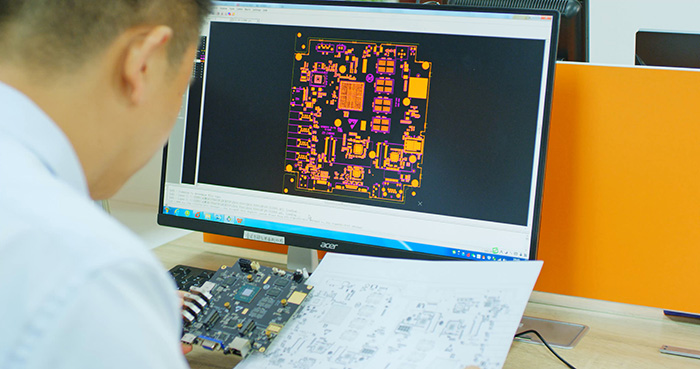
Before any component is placed on the SMT line, our engineering team conducts a rigorous Design for Manufacturability (DFM) and Design for Testing (DFT) review. We analyze your Gerber files and BOM to identify potential manufacturing bottlenecks, such as:
- Inadequate component spacing or pad dimensions.
- Improper fiducial marker placement.
- Test point accessibility for In-Circuit Testing (ICT) and Functional Testing (FCT).
2. Component Sourcing and Lifecycle Management
NPI projects are highly sensitive to component lead times and obsolescence. Our procurement matrix ensures real-time traceability and verification. We scrutinize the BOM to flag End-of-Life (EOL) or Not Recommended for New Design (NRND) components early, suggesting viable alternative footprints to maintain project momentum.
3. Precision SMT Layout Execution
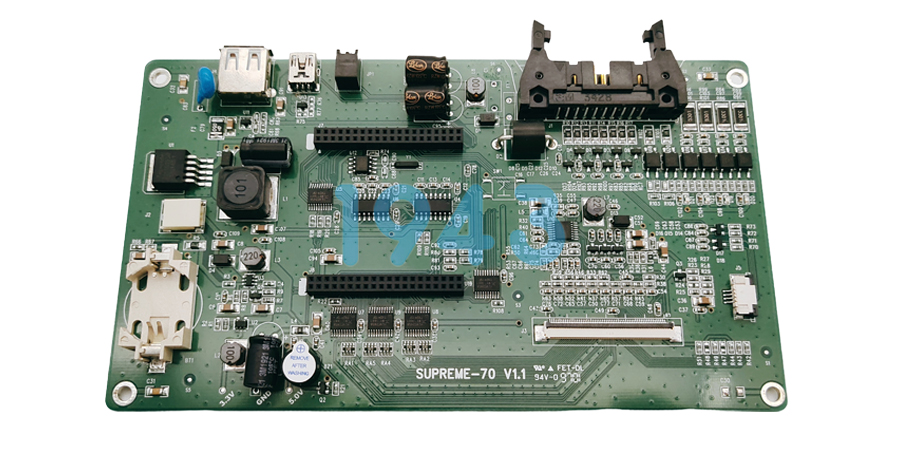
Our production lines are optimized for rapid changeovers and high-precision placement. Utilizing advanced automated optical inspection (AOI) and X-ray metrology, we ensure flawless solder joint integrity on complex packages, including Fine-Pitch BGAs, QFNs, and 0201/01005 passives.
| NPI Phase | Key Focus Area | Deliverable / Outcome |
| Pre-Production | Engineering Verification & DFM | Optimized Gerber files & finalized BOM |
| Procurement | Traceable Component Sourcing | Counterfeit prevention & risk mitigation |
| Assembly | Precision SMT & Wave Soldering | High-yield physical PCBA prototypes |
| Quality Control | AOI, X-Ray, & Functional Testing | Fully validated, deployment-ready hardware |
Why Data-Driven Project Management Matters
True NPI success is not just about operating SMT machinery; it is about managing technical data. 1943 employs a dedicated project management architecture where every revision, engineering change order (ECO), and test log is tracked transparently. This rigorous documentation ensures that the insights gained during the prototype phase are seamlessly transferrable to future scaling and volume production.
Frequently Asked Questions (FAQ)
Q1: What is the primary difference between standard PCBA manufacturing and an NPI-focused PCBA service?
Standard PCBA manufacturing is optimized for repetitive, high-volume production where designs are finalized. An NPI-focused service specializes in high-mix, low-volume orders, prioritizing rapid prototyping, comprehensive DFM feedback, engineering flexibility, and resolving design anomalies before mass production begins.
Q2: Why is a DFM review essential during the PCBA prototype stage?
A Design for Manufacturability (DFM) review identifies layout errors, component footprint mismatches, and thermal vulnerabilities before manufacturing. Addressing these issues in the digital phase prevents costly PCB fabrication spins, component wastage, and production delays.
Q3: How does 1943 handle component substitutions for obsolete or long-lead-time parts?
Our procurement and engineering teams actively cross-reference your BOM against global component databases. If a part is unavailable or near its end-of-life, we provide alternative recommendations with matching electrical characteristics and footprints for engineering approval, ensuring zero compromises on performance.
Q4: What testing methodologies are used to ensure the quality of complex SMT assemblies?
To guarantee structural and functional integrity, we utilize a multi-tiered inspection strategy. This includes Automated Optical Inspection (AOI) for placement and polarity verification, 3D X-ray inspection (AXI) for hidden solder joints under BGA and QFN packages, and customized Functional Testing (FCT) based on customer specifications.

 2026-05-29