

Accelerating Market Launch: The Critical Role of PCBA NPI Services in High-Reliability Electronics
For hardware engineering teams and product innovators, the journey from a finalized schematic to a market-ready electronic product is fraught with hidden complexities. While a design may perform flawlessly in a simulated environment, translating that design into a physical, manufacturable Printed Circuit Board Assembly (PCBA) requires meticulous planning.
This transitional phase is where New Product Introduction (NPI) services become the deciding factor between a successful product launch and costly, time-consuming design revisions.
What is an NPI PCBA Service?
A dedicated PCBA NPI service is a highly structured, engineering-focused manufacturing process designed specifically for quick-turn prototypes and low-to-medium volume pilot runs. Unlike mass-production lines engineered for static, high-volume repetition, an NPI ecosystem is built for speed, flexibility, data validation, and deep engineering collaboration.
The core objective of NPI is to identify and resolve design, component, and assembly vulnerabilities early in the product lifecycle, ensuring a seamless transition to predictable, repeatable volume manufacturing.
Maximizing Yield Through Advanced Engineering Validation
A robust NPI service does not simply place components on a board; it subjects the entire design package to rigorous technical analysis before production lines ever spin up.
1. Design for Manufacturability (DFM) and Design for Testing (DFT)
Before a single stencil is cut, a comprehensive DFM review analyzes the Gerber files and Bill of Materials (BOM). This process checks for:
- Component footprint mismatches and clearance violations.
- Thermal balance issues across the board layout to prevent component shifting during reflow.
- Testpoint accessibility to ensure high test coverage during subsequent inspection phases.
2. Intelligent Sourcing and Lifecycle Analysis
Component procurement during the NPI phase goes beyond finding parts in stock. It includes scrubbing the BOM for end-of-life (EOL) components, long lead-time items, and obsolete parts. Identifying these supply chain hurdles during the prototype phase allows engineering teams to qualify alternative footprints before the design is locked down.
Seamless Execution: The NPI Assembly Workflow
To transition a complex design into physical hardware without introducing errors, the assembly workflow must be precise, transparent, and tightly controlled.
1.Data Ingestion and Pre-Production Engineering:Phase 1。
Gerber files, BOMs, and pick-and-place coordinates are audited. Machine programming and component footprint validations are completed prior to material release.
2.Precision Solder Paste Printing and Solder Paste Inspection (SPI):Phase 2。
Solder paste is applied using precise stencils. 3D SPI systems immediately measure paste volume, height, and alignment to eliminate the leading cause of SMT defects.
3.High-Speed Surface Mount Technology (SMT) Placement:Phase 3。
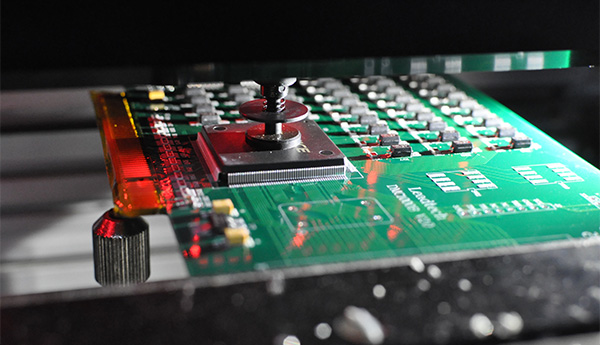
Advanced pick-and-place machinery populates the boards, handling complex components from fine-pitch BGAs and QFNs down to ultra-small 0201 or 01005 passive devices.
4.Thermal Profile Reflow and Structural Inspection:Phase 4。
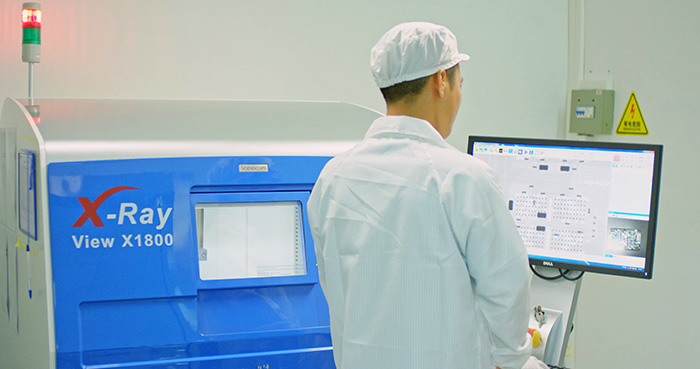
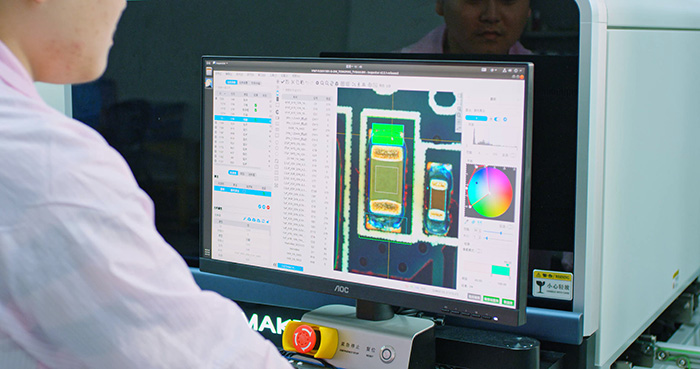
The assemblies pass through multi-zone reflow ovens utilizing customized thermal profiles. Post-reflow, boards undergo Automated Optical Inspection (AOI) and X-Ray for hidden solder joints beneath BGAs.
Why Leading Engineering Teams Partner with 1943 Technology
At 1943 Technology, we have engineered our entire facility and workflow around specialized, turn-key PCBA NPI services. We understand that speed means nothing if the underlying engineering data isn't validated for long-term reliability.
- Dedicated NPI Infrastructure: We don't sandwich your critical prototypes between high-volume production runs. Our lines are optimized specifically for rapid-setup, high-mix, low-volume execution.
- Deep Technical Support: Our engineering team acts as an extension of your R&D department, providing actionable DFM reports that pinpoint structural or component risks before assembly begins.
- High-Reliability Industry Standards: Our processes are tightly aligned with the stringent quality frameworks required by sectors such as medical devices, industrial automation, telecommunications, and aerospace systems. We ensure full traceability and component authenticity.
Frequently Asked Questions (FAQ)
What is the main difference between a standard prototype shop and an NPI PCBA service?
A standard prototype shop focuses purely on speed and putting components on a board as requested, often ignoring long-term manufacturability. An NPI PCBA service, like that provided by 1943 Technology, focuses on process stability, supply chain viability, and comprehensive DFM/DFT analysis. This ensures that the prototype can be successfully and cost-effectively scaled to volume production later.
Why is a DFM review critical during the early stages of PCBA development?
A Design for Manufacturability (DFM) review identifies layout issues—such as inadequate trace spacing, improper via placements, or incorrect component pad footprints—that could cause shorts, tombstoning, or open circuits during assembly. Catching these errors on paper saves weeks of hardware re-spins and thousands of dollars in wasted materials.
Can you handle advanced or complex components during the NPI phase?
Yes. Our manufacturing infrastructure is equipped to handle complex, high-density designs. This includes fine-pitch Ball Grid Arrays (BGAs), Micro-BGAs, Quad Flat No-Leads (QFNs), dual-sided SMT placement, and complex rigid-flex board stack-ups. We utilize high-resolution X-Ray inspection to verify solder joint integrity beneath hidden-lead components.
What files and documentation are required to initiate an NPI project?
To ensure an efficient and accurate kickoff, you should provide the complete design package: Gerber files (RS-274X or ODB++ format), a detailed Bill of Materials (BOM) detailing manufacturer part numbers and designations, an assembly drawing, and centorid/pick-and-place data for machine programming.
 2026-06-08