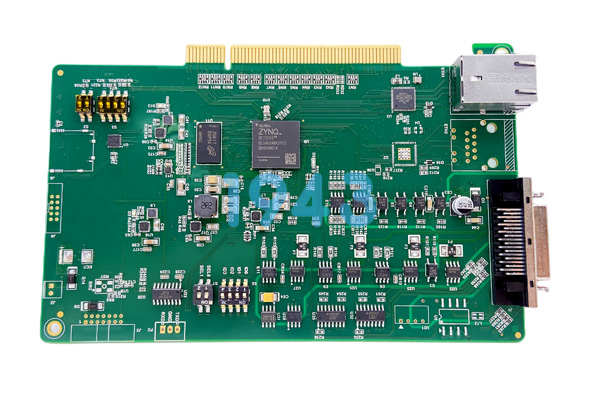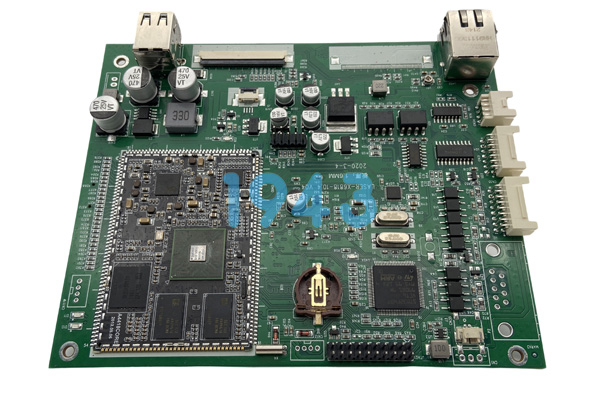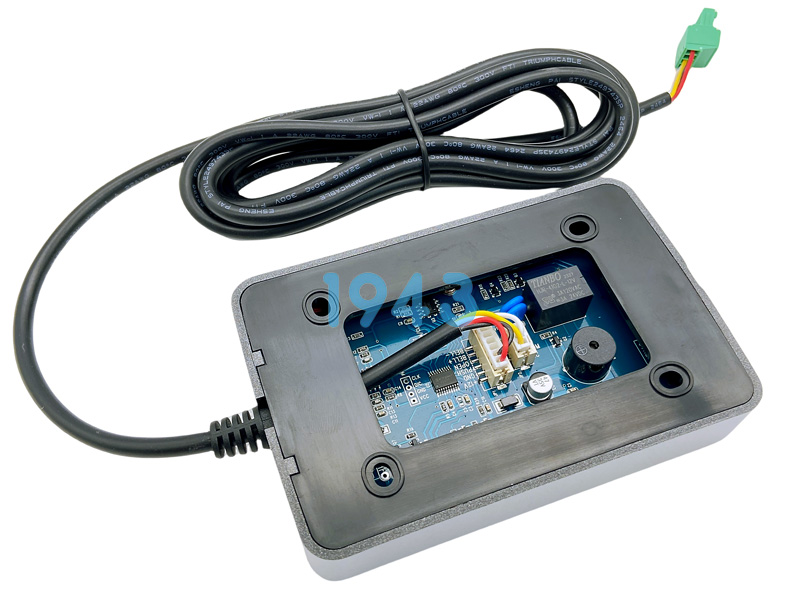


Whether you are validating a new hardware design or preparing for market entry, choosing the right PCBA manufacturing partner determines both product quality and time-to-market. 1943 Technology specializes in SMT PCB assembly and New Product Introduction (NPI) services, offering end-to-end support from R&D pilot runs to small-batch turnkey assembly. This guide explains the core processes, quality frameworks, and NPI advantages that help engineering teams reduce risk and accelerate production ramp-up.
1. The Current Landscape of SMT PCB Assembly
Surface Mount Technology (SMT) has become the dominant method in modern PCBA manufacturing. As industrial controllers, medical instruments, communication devices, and IoT hardware continue to miniaturize, the industry is moving toward finer-pitch components, high-density interconnect (HDI) boards, and lead-free soldering standards.
Today, component packages such as 0402, 0201, BGA, and QFN require placement accuracy and process stability that go far beyond conventional assembly. For original equipment manufacturers (OEMs) and hardware startups, this means SMT assembly services must combine advanced equipment with rigorous NPI workflows to catch design-for-manufacturing (DFM) issues before they become costly defects at scale.
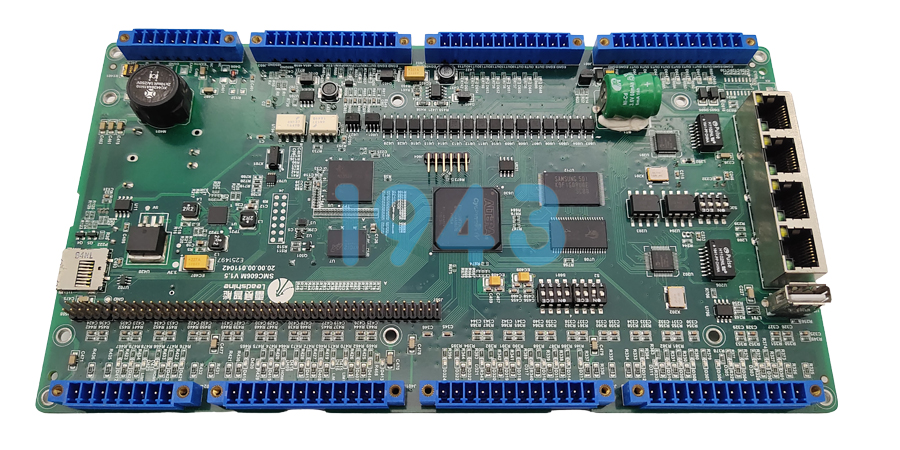
2. Core Processes in Professional PCBA Manufacturing
A reliable PCB assembly service is not merely about soldering parts to a board. It is a systematic workflow spanning bare-board fabrication, component sourcing, SMT placement, soldering, inspection, and testing.
2.1 Solder Paste Printing
The stencil aperture design and solder paste printing parameters set the foundation for joint reliability. Controlling print thickness, separation speed, and cleaning frequency prevents common defects such as insufficient solder, bridging, and tombstoning during reflow.
2.2 High-Speed Precision Placement
Modern pick-and-place machines must balance throughput with accuracy. Feeder calibration, nozzle selection, and placement force optimization are critical when handling micro-components and complex IC packages. Consistent repeatability ensures that every board in a pilot run matches the golden sample.
2.3 Reflow Soldering Profile Management
A well-defined thermal profile accounts for PCB substrate thermal tolerance, component package sensitivity, and solder paste activation requirements. Key parameters include ramp-up rate, soak zone duration, peak temperature, and cooling slope. Precise profile control is essential for achieving void-free, reliable solder joints.
2.4 AOI and Functional Validation
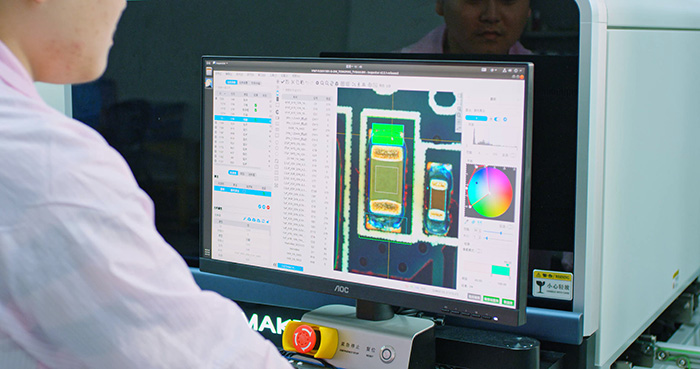
Automated Optical Inspection (AOI) detects placement offset, missing components, polarity errors, and solder joint anomalies. Layered with In-Circuit Test (ICT), Functional Circuit Test (FCT), and burn-in screening, these steps create a multi-level quality defense before boards leave the factory.
3. 1943 Technology: NPI Service Advantages
For hardware projects transitioning from prototype to production, the New Product Introduction (NPI) phase is where design intent meets manufacturing reality. 1943 Technology has built its service model around PCBA NPI capabilities, bridging the gap between engineering validation and stable mass production.
3.1 R&D Pilot Run NPI
We operate a dedicated NPI pilot-run channel for design validation and process characterization. Our engineering team conducts upfront DFM analysis to identify PCB layout risks, component availability constraints, and process path limitations. Through controlled small-lot builds, we generate detailed pilot reports—documenting yield data, defect pareto, and process optimization recommendations—so your design can be frozen with manufacturing confidence.
3.2 Small-Batch Turnkey Assembly
Not every product requires high-volume output immediately. For market-validation units, specialized industrial equipment, or high-mix/low-demand hardware, 1943 Technology offers flexible low-volume PCB assembly and box-build assembly services. From PCB population to enclosure integration, cable harnessing, firmware programming, and final system testing, we provide a single-point solution that simplifies supply-chain management and shortens delivery cycles.
3.3 Full-Process Traceability
From incoming material inspection to outbound shipment, we maintain batch-level traceability records. Process parameters, equipment logs, and material lot codes are archived for every build lot. This data-driven traceability supports continuous improvement and satisfies the documentation requirements of regulated industries.
3.4 Engineering Collaboration
Our process engineers and project managers work alongside client R&D teams during the NPI phase, offering BOM optimization advice, alternate component recommendations, and test-strategy design. This collaborative approach reduces engineering trial costs and prevents late-stage design changes.
4. Quality Management in PCBA Assembly
Beyond IPC-A-610 acceptance criteria, 1943 Technology strengthens quality assurance with stage-gate controls tailored to NPI and small-batch production:
-
Incoming Quality Control (IQC): Verification of PCB solderability, component dimensional accuracy, and electrical parameters before material release to the line.
-
First Article Inspection (FAI): Comprehensive dimensional, placement, and functional verification of the first board in every batch to confirm program, material, and process setup correctness.
-
In-Process Quality Control (IPQC): Scheduled sampling at solder paste printing, placement, and reflow stations to monitor process stability.
-
Outgoing Quality Control (OQC): Final visual, functional, and packaging integrity checks, accompanied by a shipment inspection report.
5. Application Areas for SMT and PCBA Manufacturing
The demand for professional SMT assembly services now spans a wide spectrum of technology sectors:
-
Industrial Automation: PLC modules, servo drive boards, and sensor interface boards demand long-term operational reliability under wide-temperature conditions.
-
Medical Equipment: Diagnostic instrument mainboards and portable monitoring modules require strict process consistency and clean-room discipline.
-
Telecommunications & Networking: 5G small cells, routers, gateways, and IoT communication modules involve high-frequency PCB materials and signal-integrity safeguards.
-
New Energy & Power Electronics: Inverter control boards, battery management systems (BMS), and charging-station control units must manage high-voltage, high-current, and thermal dissipation challenges.
-
IoT & Embedded Systems: Edge-computing terminals, AI inference modules, and smart sensor nodes typically exhibit high-mix, low-volume order patterns ideal for NPI-centric manufacturing.
6. Frequently Asked Questions (FAQ)
Q1: What is the difference between SMT assembly and through-hole (THT) assembly?
A: SMT assembly mounts components directly onto the surface of the PCB and solders them in a reflow oven. It enables higher component density, smaller product size, and greater automation. Through-hole assembly inserts component leads through drilled holes and solders them via wave soldering or manual methods, often used for high-power devices, large connectors, and legacy components. Most modern PCBA manufacturing employs a mixed-technology approach to balance performance, size, and cost.
Q2: What does New Product Introduction (NPI) involve in PCBA manufacturing?
A: NPI is the structured process of transferring a new design into manufacturable production. Key stages include project kickoff, DFM review, BOM analysis, process flow definition, pilot-run execution, defect analysis and root-cause resolution, process optimization, and final pilot report generation. At 1943 Technology, our NPI services ensure that manufacturing risks are identified and mitigated before you commit to volume tooling and large-scale procurement.
Q3: When should I choose low-volume PCB assembly services?
A: Low-volume PCB assembly is ideal for R&D prototype validation, pre-market pilot builds, customized industrial or medical devices, high-value hardware with limited demand, and projects with stable annual volume but infrequent batch releases. 1943 Technology’s small-batch turnkey assembly solves the common pain point where high-volume factories decline small orders and generic shops lack process rigor.
Q4: How do I select a reliable SMT PCB assembly partner?
A: Evaluate four dimensions: (1) NPI capability—experience in pilot-run support and ramp-up management; (2) Process equipment—placement accuracy, reflow thermal control, and inspection coverage aligned with your product complexity; (3) Quality system—IQC, FAI, IPQC, and traceability mechanisms; and (4) Delivery flexibility—ability to handle small-batch, multi-variant orders with short lead times. 1943 Technology’s focus on NPI-driven PCBA manufacturing makes us a practical choice for engineering-centric customers.
Conclusion
The SMT PCB assembly and PCBA manufacturing landscape is no longer defined by capacity alone. Success depends on the ability to manage complexity during the New Product Introduction phase and deliver consistent quality across low-to-medium volumes. 1943 Technology centers its operations on NPI services, R&D pilot runs, and small-batch turnkey assembly, giving hardware developers a dependable path from design validation to stable production.
Ready to move your prototype into controlled production? Contact 1943 Technology today for a DFM review and NPI pilot-run proposal.
 2026-05-13