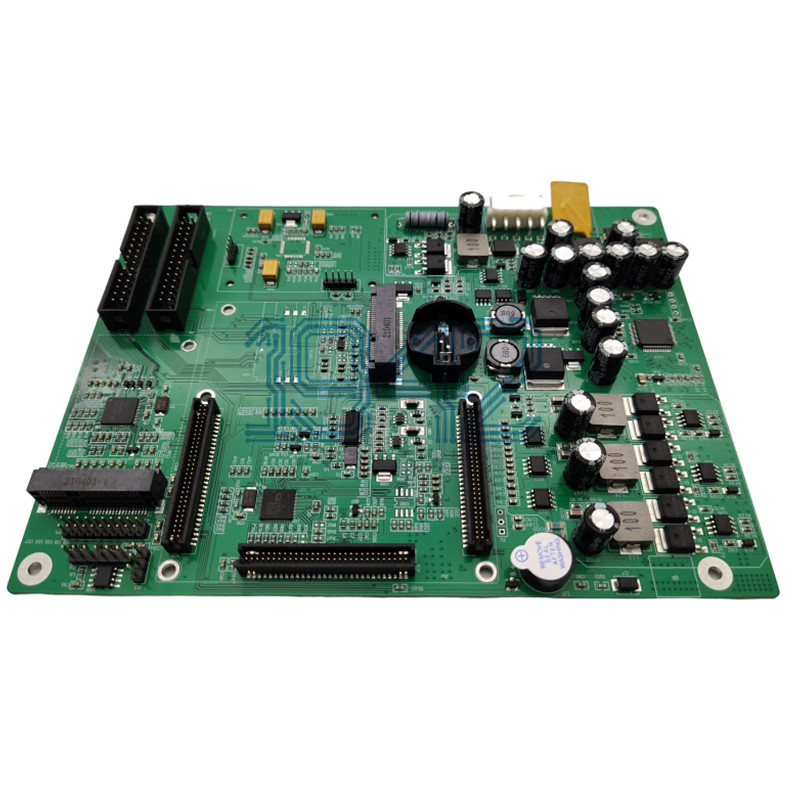
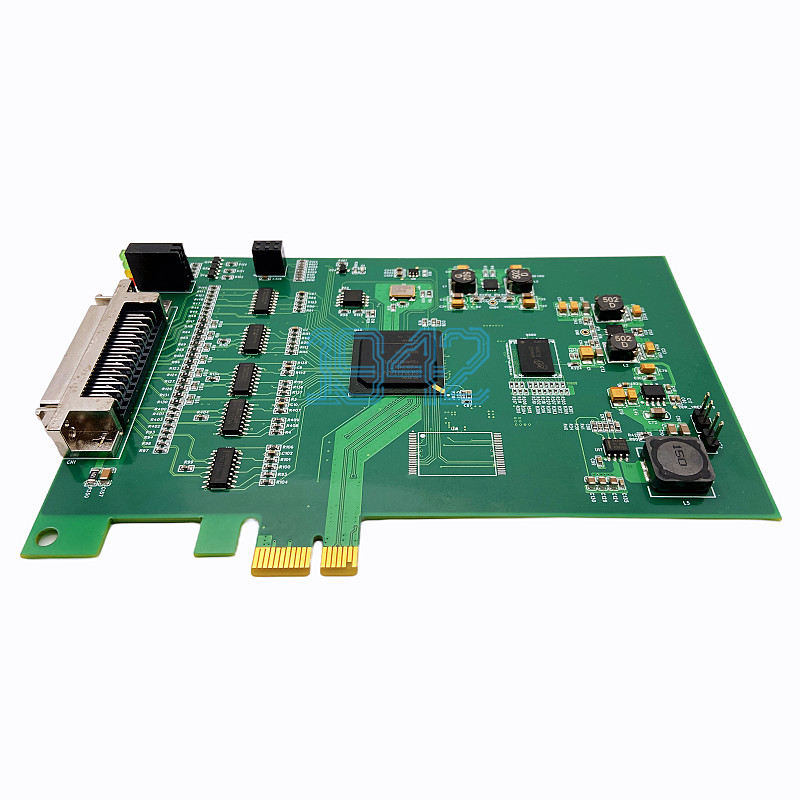
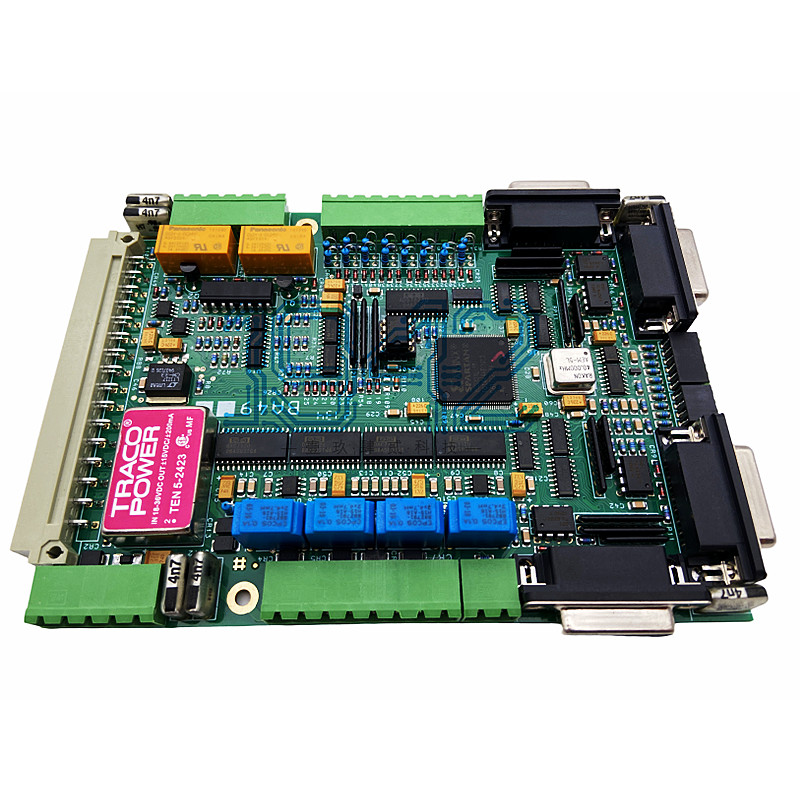
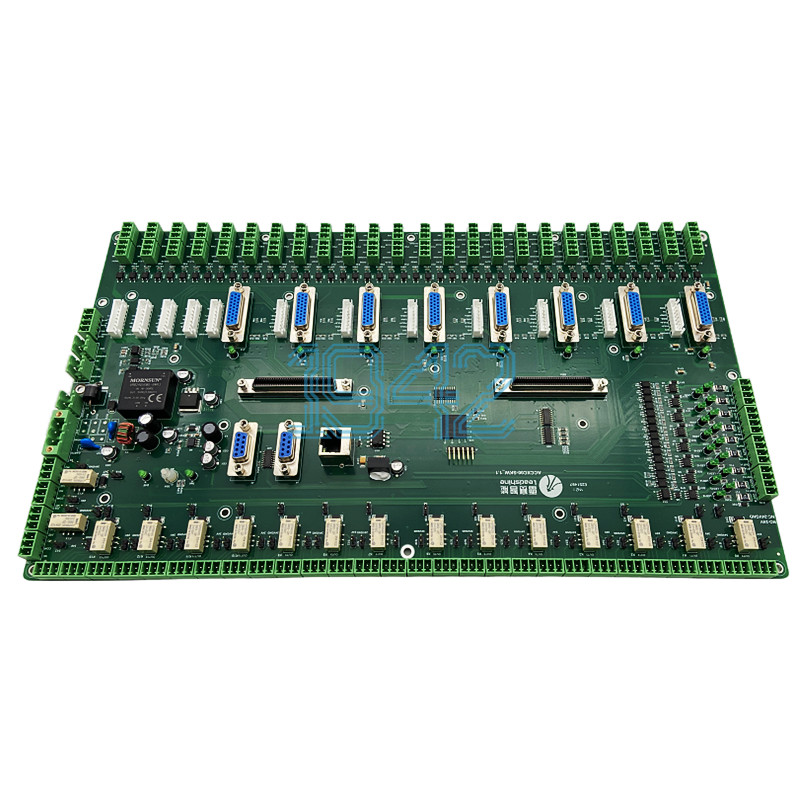
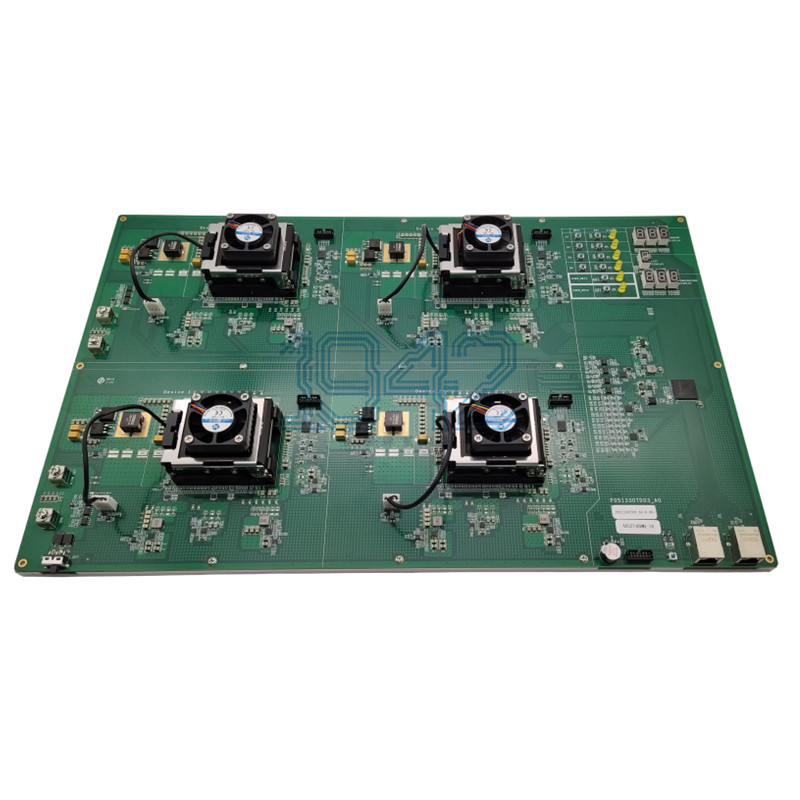
Point:121
Components type:52
PCB size: 195*147
Minimum package size of resistance capacitance sensing: 0603
Minimum device pin spacing:0.65
Welding mode:Reflow soldering for double side + Wave soldering
Manufacturing process: PCB producing + components procurement + assembly
The assembly of Clinical Test Analyzer Printed Circuit Boards requires stringent quality control, precise component sourcing, and a highly repeatable manufacturing process. As a critical medical diagnostics device, a clinical test analyzer demands absolute signal integrity, low-noise analog-to-digital conversion, and long-term thermal stability.
At Shenzhen 1943 Technology Co., Ltd., we provide an integrated, one-stop PCBA service tailored to medical-grade electronics. To bridge the gap between initial design and high-yield mass production, we offer specialized PCBA New Product Introduction (NPI) services. We believe that NPI is not merely a trial run, but a critical gatekeeping step where standardized production baselines are established to guarantee reliability.
Our NPI process is engineered to address four core manufacturing variables before scaling:
Our dedicated NPI lines systematically validate whether the design can be reliably manufactured across the entire production sequence. This includes:
PCB Fabrication & SMT (Surface Mount Technology): Verifying stencil apertures, solder paste deposition, and component placement tolerances.
DIP (Dual In-line Package) & Hand Soldering: Ensuring robust joint formation for connectors and heavier mechanical components.
Functional Testing (FCT) & In-Circuit Testing (ICT): Confirming that test fixtures and software diagnostic scripts accurately isolate faults.
Final Assembly, Packaging, & Environmental Protection: Validating conformal coating thickness, potting reliability, and ESD-safe packaging protocols to protect sensitive biosensor interfaces from environmental moisture and contamination.
A medical device is only as reliable as its weakest component. During the NPI stage, our engineering team conducts deep-dive analyses of your Bill of Materials (BOM):
Material Selection: Assessing component lifecycles to eliminate end-of-life (EOL) or obsolete parts early.
Alternative Sourcing: Identifying pin-to-pin compatible alternatives for high-risk components to prevent single-source bottlenecks.
Supplier Qualification: Ensuring that all active and passive components are sourced from authorized distributors with traceable quality certificates.

Before releasing a Clinical Test Analyzer PCBA to the mass production line, we subject pilot batches to stress testing to verify their functional limits. This involves identifying potential failure modes under thermal and mechanical stress, verifying solder joint integrity under thermal cycling, and ensuring the board performs consistently under continuous operation. Establishing these benchmarks early prevents costly field failures and guarantees compliance with medical reliability standards.
Delays in the manufacturing transition can miss crucial market windows. By running a structured NPI program, we run parallel engineering tasks—such as designing custom test fixtures while the PCBs are in fabrication. This proactive coordination ensures that the entire project timeline remains predictable, helping you transition smoothly from prototype to volume production within your targeted market schedule.
Let the products quickly and stably realize marketization and become the global electronic intelligence innovation enabler