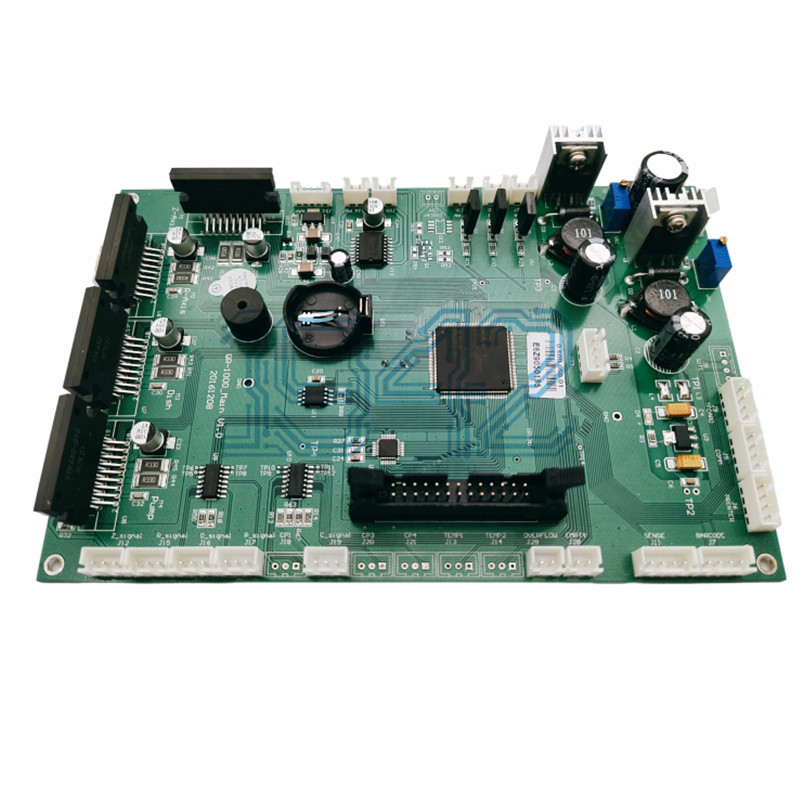
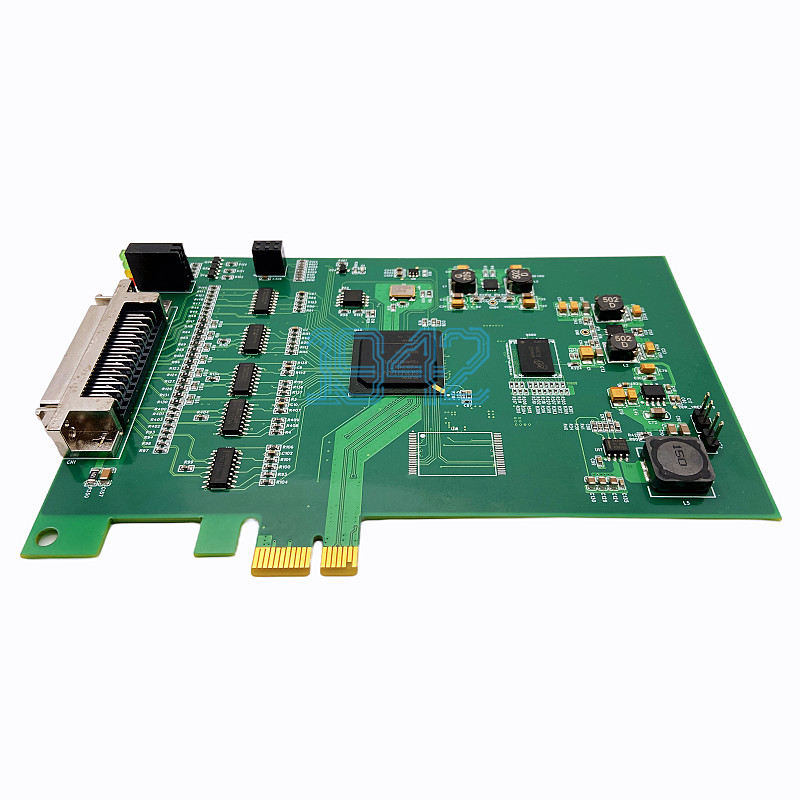
Point:105
Components type:52
PCB size: 183*136mm
Minimum package size of resistance capacitance sensing: 0603
Minimum device pin spacing:0365
Welding mode:Reflow soldering + Wave soldering
Manufacturing process: PCB producing + components procurement + assembly
Medical inspection and analysis instruments require a manufacturing process that delivers consistent quality, stable performance, and reliable traceability. From laboratory analyzers and diagnostic equipment to imaging subsystems, testing modules, sensor control boards, and portable medical devices, every PCB assembly must meet strict process requirements throughout production. Shenzhen 1943 Technology Co., Ltd. provides a complete PCB assembly one-stop service covering prototype, NPI, pilot production, and mass manufacturing to support the development and production of medical electronic products.
Our manufacturing capabilities include PCB fabrication, electronic component sourcing, SMT assembly, THT/DIP assembly, BGA assembly, mixed-technology assembly, AOI inspection, X-ray inspection, ICT, functional testing, conformal coating, mechanical assembly, final packaging, and logistics support. Each production stage follows documented process controls to improve manufacturing consistency and product reliability.
Medical electronics often involve complex PCB designs, high-density components, fine-pitch packages, and strict quality requirements. Manufacturing stability depends not only on assembly accuracy but also on process verification before volume production. For this reason, PCBA NPI (New Product Introduction) services are an essential part of our manufacturing workflow.
At Shenzhen 1943 Technology Co., Ltd., NPI serves as the bridge between product development and mass production. The objective is not simply to build prototypes, but to establish manufacturing standards before production is scaled. Early verification helps reduce process risks, improve product consistency, and shorten the transition from engineering samples to stable manufacturing.
During the NPI stage, the complete manufacturing process is evaluated, including PCB fabrication, SMT assembly, DIP assembly, inspection procedures, functional testing, mechanical assembly, packaging, transportation protection, and production documentation. Each process is reviewed to confirm that it can be repeated consistently during future mass production without introducing unnecessary variation.
Material selection and supply chain stability are also verified during NPI. Components are reviewed for availability, lifecycle status, approved alternatives, and long-term sourcing risks. Manufacturing engineers work closely with purchasing teams to identify potential supply issues early, helping customers avoid unexpected shortages or redesigns later in the product lifecycle.
Product reliability is another important objective of NPI. Trial production provides an opportunity to evaluate solder joint quality, assembly accuracy, electrical performance, thermal behavior, and overall manufacturing robustness. Manufacturing feedback can be incorporated into product optimization before volume production begins, reducing the likelihood of field failures and improving long-term reliability.
Project scheduling is equally important. NPI helps identify production bottlenecks, optimize manufacturing processes, improve production efficiency, and establish realistic production timelines. By validating manufacturing readiness in advance, customers gain better visibility into project milestones and can prepare for market launch with greater confidence.

For medical inspection and analysis instruments, documentation and traceability are integrated throughout production. Material records, production parameters, inspection data, testing results, and process documentation are maintained to support quality management requirements and customer documentation needs. Depending on project requirements, manufacturing processes can be customized to match customer specifications and regulatory expectations.
Shenzhen 1943 Technology Co., Ltd. supports projects from engineering prototypes through low-volume production and full-scale manufacturing. Our engineering, supply chain, and production teams work together to provide practical manufacturing solutions that improve product manufacturability while maintaining design intent. Whether supporting laboratory diagnostic equipment, clinical testing systems, medical monitoring devices, or analytical instruments, we focus on building stable manufacturing processes that support consistent product quality throughout the entire product lifecycle.
By combining PCB fabrication, precision PCB assembly, comprehensive testing, and structured PCBA NPI services, Shenzhen 1943 Technology Co., Ltd. helps medical equipment manufacturers establish reliable production standards before scaling to mass production, creating a smoother transition from product development to commercial manufacturing.
Let the products quickly and stably realize marketization and become the global electronic intelligence innovation enabler